Genjutsu AI: recast a video reference
Explore Genjutsu AI motion transfer and object replacement, then prepare a reference-driven video variation in H3Max. Study credited examples, load a stored video and adapted prompt, and review the supported settings before generating.
Video workspace
Fighting scene character recast
27/30View prompt
Use @Video1 for the two performers’ fighting choreography, timing and camera movement. Recast them as fictional game-styled adult fighters, one in a white sleeveless shirt and blue trousers, the other with short silver hair and a purple combat jacket. Keep their roles distinct, preserve readable arm movements and believable proportions, and retain a coherent indoor training hall. No captions or extra people.
The original motion video loads automatically. Optionally add your own character or setting images and update their role instructions.
Seedance 2.5 · 11s · 720p · 16:9
Official Higgsfield Genjutsu reference, checked October 4, 2026. The original prompt and seed were not published. This adapted H3Max brief uses Seedance 2.5 and has not been verified as an identical reproduction. Use This Prompt loads the original moving input, not the output preview or poster. Review the quote before generating.
HiggsfieldIntroduction
What does Genjutsu AI do?
Genjutsu AI is Higgsfield’s name for recasting existing video with motion transfer or selected object swaps. Start by deciding what the source contributes and what should change.
Read the original movement
Genjutsu AI starts with a moving reference rather than a blank frame. Watch the performer’s gestures, camera position and sequence of actions before writing. Describe the opening, action and closing pose coherently.
Use the workflow available here
This Genjutsu AI page prepares a reference-to-video draft in H3Max using Seedance 2.5. Higgsfield’s examples illustrate the search intent, while generation runs through H3Max’s supported engine. Review the selected model and quote.
Separate inspiration from reproduction
A Genjutsu AI example can show a convincing transformation without proving that another engine will reproduce it exactly. Our gallery labels adapted prompts and credits official sources. Evaluate the complete generated result rather than assuming the preview is a guarantee.

How to use
How to prepare a Genjutsu AI inspired video
- STEP 1
Choose a complete reference
Watch a Genjutsu AI example, open its credited source and load the stored moving input with the adapted brief and settings.
- STEP 2
Define the visible change
Edit your Genjutsu AI draft to describe the character, object or scene change. Add reference images and map their roles when needed.
- STEP 3
Review and create
Check Genjutsu AI inspired duration, framing, resolution, audio and the displayed quote. Sign in and press Create when your draft is ready.
- STEP 4
Inspect and download
Play the complete Genjutsu AI inspired result, inspect identity and scene continuity, listen to the soundtrack and download your preferred variation.
Features
Plan the Genjutsu AI motion reference
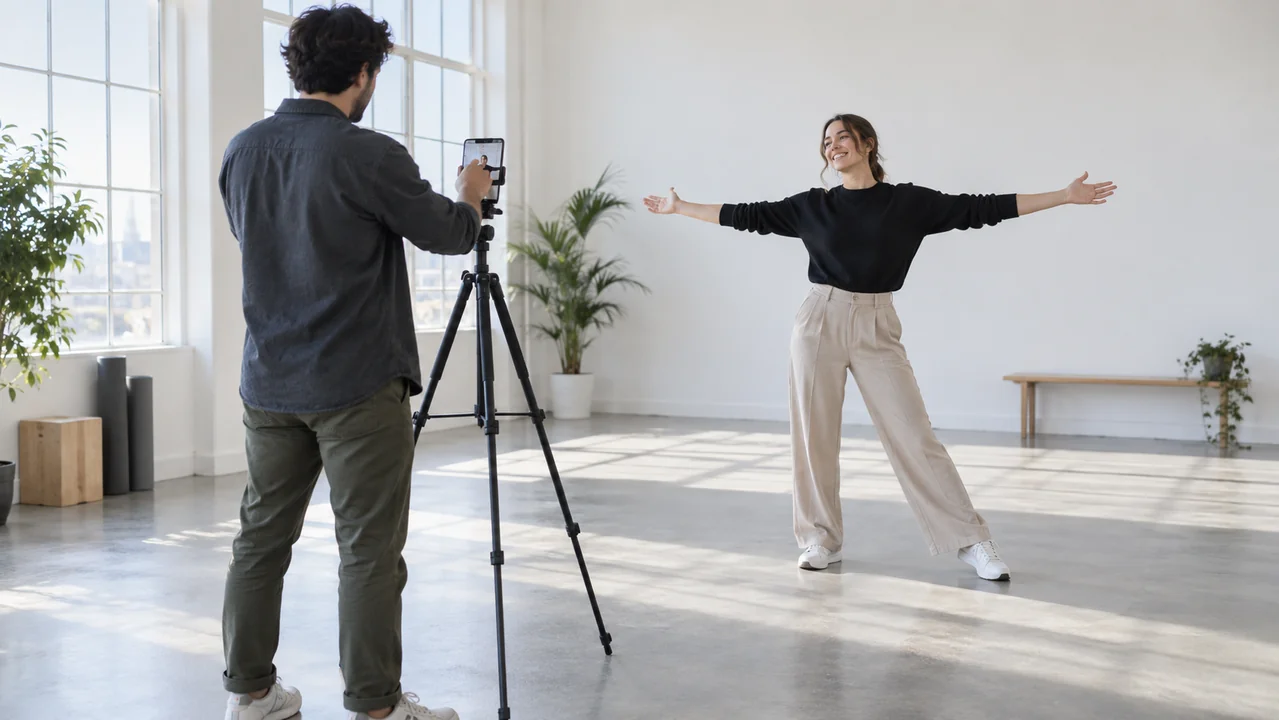
For Genjutsu AI research, choose the action first. Readable choreography, a clean camera move and a modest number of subjects are easier to describe than a crowded montage.
Choose one complete action
For a Genjutsu AI inspired draft, select a gesture that has a beginning and end. An arm sweep, turn or short walk creates a clear movement reference. Keep enough space around the subject for hands and feet to remain visible, and watch for sudden cuts that obscure the action.
Describe timing with the video token
Use @Video1 in your Genjutsu AI brief to assign the moving reference its role. Ask it to guide the sequence, framing and pace, then describe the intended subject. A concise description of the action lets the reference carry useful visual information without creating contradictory directions for the camera.
Check framing before submission
The Genjutsu AI workspace uses supported duration, aspect ratio, resolution and audio controls. Loading an example restores compatible choices for that reference. Framing changes can affect how much of the action remains visible; preview the entire source before deciding.
Map Genjutsu AI character references
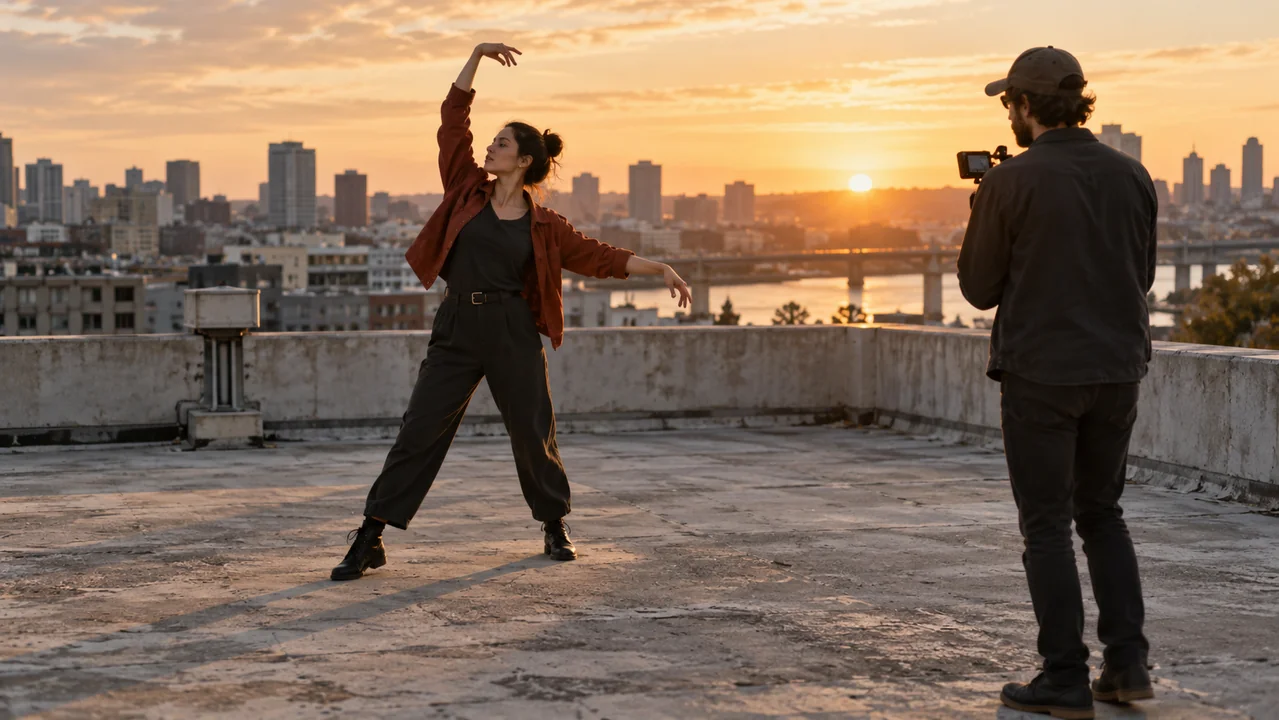
Genjutsu AI searches often concern changing the performer. Separate the identity reference from the motion reference and explain the role of each image you actually upload.
Use a readable character image
For Genjutsu AI character planning, choose a well lit image with a clear face, recognizable clothing and enough body detail for the action. A distant group photograph leaves the intended subject ambiguous. If the source contains two performers, assign distinct roles so their identities and costumes do not blend.
Match tokens to real inputs
A Genjutsu AI draft should mention @Image1 only when that image is present in the workspace. State that the image supplies appearance while @Video1 supplies action. Loading our video-only examples does not invent missing character files or substitute the preview poster as an identity.
Keep wardrobe instructions consistent
For Genjutsu AI inspired recasting, define a few stable visual cues: jacket color, hairstyle, footwear and body proportions. Resolve conflicts between your text and reference image before submitting. Inspect sleeves, hands and facial details when the performer turns or approaches the camera.
Write a focused Genjutsu AI replacement brief
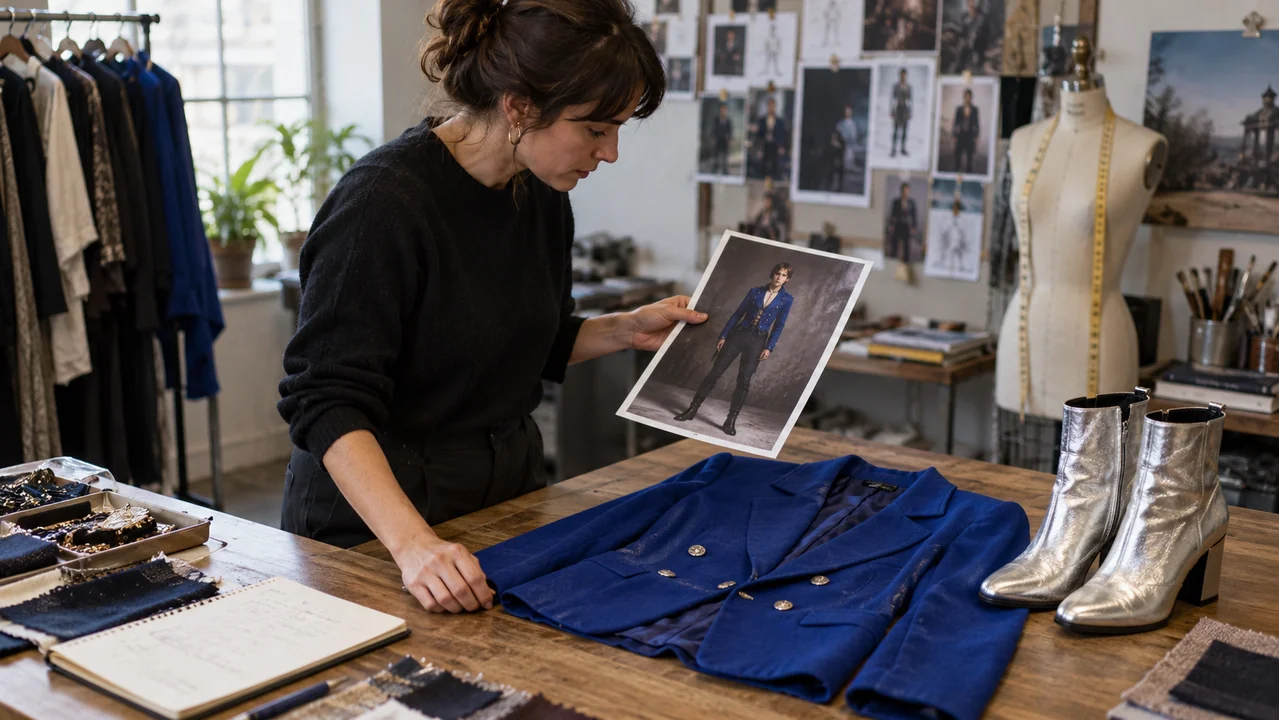
Genjutsu AI also refers to replacing selected elements. For a useful H3Max variation, name the requested visual change and the surrounding details that should remain coherent.
Identify one visible object
A Genjutsu AI product brief works best when the target is easy to locate. Describe the mug on the table, the jacket worn by the foreground performer or the prop held in one hand. Avoid a vague instruction to change everything, which makes it difficult to evaluate whether the intended edit succeeded.
Preserve context through instructions
For Genjutsu AI inspired object changes, ask for consistent table geometry, light direction and camera framing. These instructions express your goal; generative video can still alter nearby details. A product that looks correct in the opening frame may distort when a hand crosses it or the perspective changes.
Review scale and contact
Check a Genjutsu AI style replacement where the object meets a hand, floor or tabletop. The new item needs believable scale and a stable position through motion. If the change is unstable, simplify the brief or choose a cleaner reference moment before spending credits on another deliberate generation.

Explore Genjutsu AI location variations
Genjutsu AI examples show how one action can inspire a different environment. Define a coherent scene with stable lighting and enough room for the original movement.
Choose a world that fits the action
A Genjutsu AI location variation should accommodate the performer’s path. A rooftop jump needs a readable landing surface; a seated conversation needs plausible chairs and space between subjects. Keep the floor plane and horizon consistent so the movement feels connected to its surroundings.
Align lighting with the new setting
For Genjutsu AI inspired scene changes, specify one clear lighting condition. Warm afternoon sun, soft greenhouse light or an interior overhead source gives the scene a consistent direction. Check whether the subject’s skin, clothing and contact shadows respond plausibly to the chosen environment as the camera moves.
Compare official visual examples
Our Genjutsu AI gallery includes credited official before-and-after references for character recasting, world changes and rooftop motion. Stored playback files retain the complete selected clips. Their original generation prompts and seeds were not published on the source page, so H3Max supplies adapted briefs that describe visible behavior. Source records distinguish input video, output preview and supported workspace settings.

Review the complete Genjutsu AI variation
A Genjutsu AI inspired result needs a full playback check. Identity, anatomy, scene continuity and audio can change across the take even when the opening frame looks convincing.
Watch faces and silhouettes
Review a Genjutsu AI character variation during turns, occlusions and closeups. Compare hair, costume and body shape from beginning to end. A recognizable silhouette should remain stable through the main action; a polished poster does not establish that every moving frame is usable.
Treat audio as a separate decision
Genjutsu AI visual inspiration does not establish exact soundtrack preservation in this workspace. The selected engine can generate synchronized audio when enabled, but the result should be listened to and checked. For precise final dialogue or music placement, finish your chosen clip in your regular editing workflow.
Reuse without automatic generation
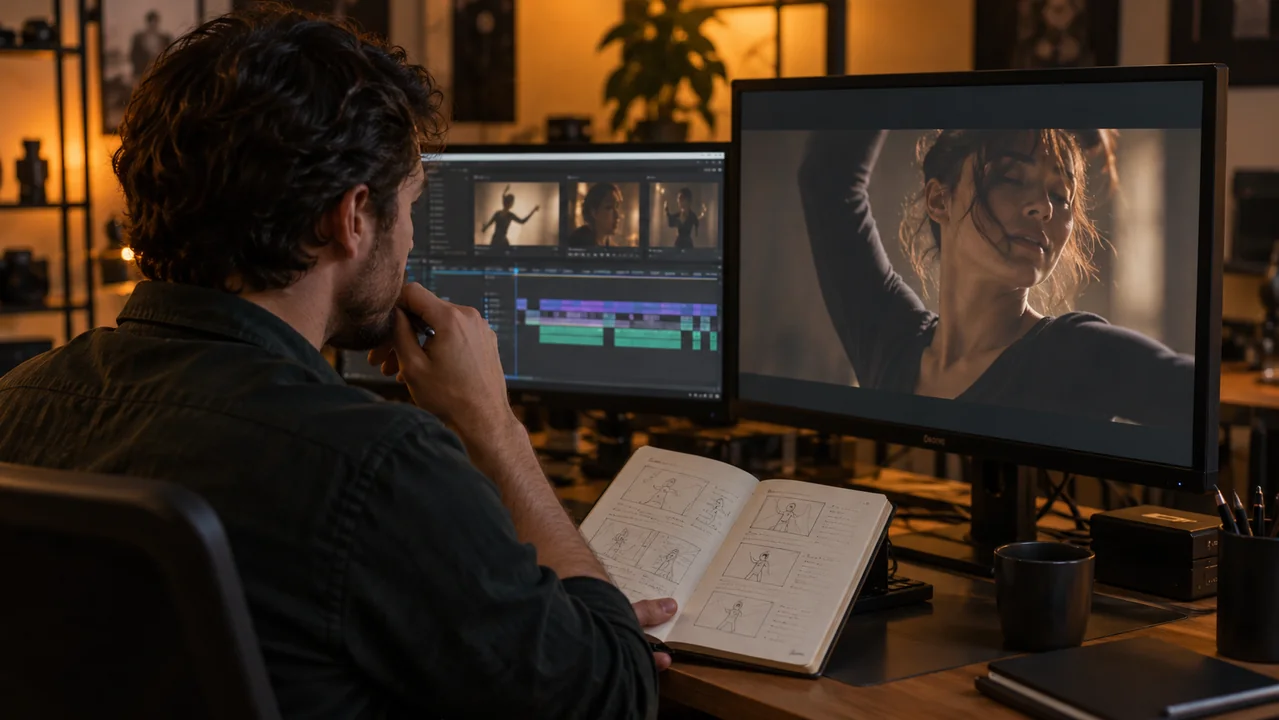
Select a Genjutsu AI example and press Use This Prompt to load its stored moving input, adapted brief and compatible settings. The button prepares an editable draft and does not submit generation or spend generation credits. Modify the subject or setting, review the quote and press Create when ready.
Example prompts
Genjutsu AI inspired character recasting
Use @Video1 for the action sequence and camera framing. Recast the foreground performer as a fictional adult in a cobalt jacket and silver boots. Preserve a consistent identity, readable hands, believable proportions and the visible choreography. Keep the scene coherent, without extra people or captions.
Genjutsu AI inspired world change
Use @Video1 for the performer’s movement, timing and camera path. Place the action in a spacious botanical greenhouse with a level stone floor, tall plants and soft afternoon light. Keep the subject’s appearance consistent, preserve believable contact shadows and avoid abrupt cuts or extra characters.
User reviews
H3Max video creator feedback.
H3Max creator reviews

I made a full character PV for my game with MiniMax H3 in one afternoon. The menu UI stayed readable in every frame and the character never went off-model. That used to cost me a contractor and three weeks.

We tested every AI video generator on the market for stylized work. H3 is the only one that held our anime style across cuts. We now use it for pitch reels and animatics on every project.

I uploaded four product photos and got a listing video with music and a voiceover the same day. My click-through rate on the new listings is up 38%. H3 even got the label text on my packaging right.

I ship five vertical videos a week for three brands. MiniMax H3 gets me from brief to draft in under an hour, with sound already synced. My old workflow needed a videographer and two review rounds.

The editing side is what sold me. A client wanted the background of an interview changed — I typed one sentence into MiniMax H3 and the lighting on the subject matched the new scene automatically.

I previsualized my entire short film in MiniMax H3 before we shot a single frame. Rack focus, match cuts, even the title cards — it understands director language, not just keywords.
Nano Banana 2.1 Pricing and Credit Plans
Cancel anytime
Lite
50% off0.025 / credit
Billed $ yearly179· Save $179.8
Video Models



Image Models



- Includes Nano Banana 2.1 and all premium models
- Up to 1 batch generation task
- Standard generation speed
- Standard generation success rate
- Standard customer support
- Commercial Use License
Standard
50% off0.017 / credit
Billed $ yearly299· Save $299.8
Video Models
Image Models
- Includes Nano Banana 2.1 and all premium models
- Up to 4 batch generation tasks
- Priority processing speed
- High generation success rate
- Priority customer support
- Commercial Use License
Pro
50% off0.014 / credit
Billed $ yearly599· Save $599.8
Video Models
Image Models
- Includes Nano Banana 2.1 and all premium models
- Up to 10 batch generation tasks
- Fastest generation speed
- High generation success rate
- Dedicated account manager
- Commercial Use License
Max
50% off0.012 / credit
Billed $ yearly1,199· Save $1,199.8
Video Models
Image Models
- Includes Nano Banana 2.1 and all premium models
- Up to 10 batch generation tasks
- Fastest generation speed
- High generation success rate
- Dedicated account manager
- Commercial Use License
Pay safely and securely with























FAQ
Frequently asked questions
What is Genjutsu AI?
Genjutsu AI is Higgsfield’s video transformation workflow for motion transfer and selected element replacement. This page helps you understand those tasks and prepare an independent H3Max reference-driven variation.
Which model does this workspace use?
This Genjutsu AI page uses Seedance 2.5 reference-to-video in H3Max. The official Higgsfield clips are credited visual references, not outputs generated by our workspace or promises of identical reproduction.
Are the gallery prompts the original prompts?
The selected Genjutsu AI source page does not publish the original prompts or seeds for these clips. Our examples include clearly labeled adapted prompts, complete stored video references and compatible workspace settings.
Does Use This Prompt spend credits?
Use This Prompt prepares the selected Genjutsu AI inspired draft with its video, brief and settings. It does not submit a generation. You can edit the draft and inspect the quote before pressing Create.
Can I change a person or the background?
You can describe a character or setting change in a Genjutsu AI inspired reference draft and add supported image references. Generative results may alter surrounding details, so check identity, contact shadows and continuity across the entire output.
CTA
Prepare your Genjutsu AI inspired variation
Choose a credited reference, define one visible change and inspect the complete result. Genjutsu AI research becomes a practical starting point in the shared H3Max workspace.
Prepare a reference video